Asmat - In the Footsteps of Michael Rockefeller

Episode 1 of our Historic Expeditions Series

17 days/16 nights ● from Timika/to Wamena, Papua ● 11 nights in tent ● 3 nights in The Baliem Valley Resort ● min 5 pax/max 10 pax ● Level of difficulty: 2** (occasionally very basic comfort; no special fitness required)

In October to November 1961, Michael Rockefeller undertook his second expedition into the Asmat region of southwest New Guinea. His focus was the remote inland northwest, at the time, one of the least explored areas anywhere in the world.

On November 13, 1961, Rockefeller returned to Siuru (today’s Agats). Just five days later, he set out again, this time along the southern coast toward the east. What followed is well known: his catamaran ran into trouble in heavy seas, took on water, and began to sink. Rockefeller decided to swim to shore. He was never seen again. His disappearance remains one of the most enduring mysteries of modern exploration.

For the first time, we will retrace this second Asmat expedition as part of our new series Historic Expeditions, following his route as documented in The Asmat of New Guinea: The Journal of Michael Clark Rockefeller (The Museum of Primitive Art, New York, 1967).

The expedition is led by Dr. Werner Weiglein, a world-renowned expert on Papua. He has guided over 200 expeditions on the island of New Guinea since 1979, founded The Baliem Valley Resort in Wamena, and – with 35 overland expeditions to the Carstensz Pyramid (one of the Seven Summits) – holds a remarkable record for this peak.

Price per person
from Timika/to Wamena, Papua

USD 6.990 Price in EUR / IDR on request
  • 11.01.-27.01.2027

CONTEXT

Rockefeller’s first journey, in June–July 1961, took him to the eastern southern coast, visiting settlements such as Omandesep, Otjanep, and Biwar-Laut. During this trip, he developed a deep fascination with Asmat art and culture. His second expedition later that year was far more ambitious: a journey deep into the inland forests of western Asmat. Regions where, at the time, people may never have heard the sound of a boat engine. Head-hunting was still practiced along the upper rivers. By any standard, this was a high-risk undertaking. It is precisely this second expedition that we aim to retrace. Not only because of its historical significance, but because it led into one of the last remaining blank spots on the map at a time when most of the world had already been explored.
 

THEN AND NOW

Today, much has changed – but not everything. Along the rivers, even several days inland, motorboats and trade goods have reached most villages. Small shops run by migrants from other parts of Indonesia are now common. But once you leave the settlements behind, very little has changed. The vast river systems, dense rainforest, and the raw scale of the landscape remain exactly as they were in Rockefeller’s time. Traditional Asmat life also continues. Ceremonial houses, rituals, and artistic traditions are still actively maintained, often requiring significant communal effort.

FOCUS OF THE EXPEDITION

Rockefeller was deeply impressed by the artistic creativity of the Asmat. The unfamiliar objects—whether towering ancestor poles, war shields, or everyday items such as paddles, weapons, and containers—captivated him. It is well known that his father, Nelson Rockefeller, was already an avid collector of so-called “primitive art” and had established a museum in New York. It is easy to imagine that his son intended to surprise him with these striking cultural objects from distant New Guinea and to significantly expand the collection. He had the means to do so, both financially and through his connections with the Dutch colonial administration at the time.

For our journey, the search for traditional craftsmanship and cultural practices will also play an important role. In the remote inland regions of the west, ceremonial festivals with life-sized mask costumes, known as Doroe, and ritual figures, known as Jiwawoka, remain an important tradition. Each river system has its own distinct mask designs, and the level of craftsmanship is remarkable. The same applies to shields and ancestor poles, where different regions have developed their own unique styles and forms of expression.

PURCHASE AND SHIPMENT OF HANDICRAFT

Dr. Weiglein has been collecting ethnological objects and artifacts from Papua for over 40 years and founded his own Papua museum in Germany. He is considered one of the leading experts on Asmat culture and material heritage. Visit the museum’s website here: Papua Museum

Participants who wish to acquire larger quantities of handicrafts or large-format pieces can rely on our network and experience to support them through the complex shipping process. In addition to the expedition itself, this represents a unique opportunity for serious tribal art collectors.

Rockefeller
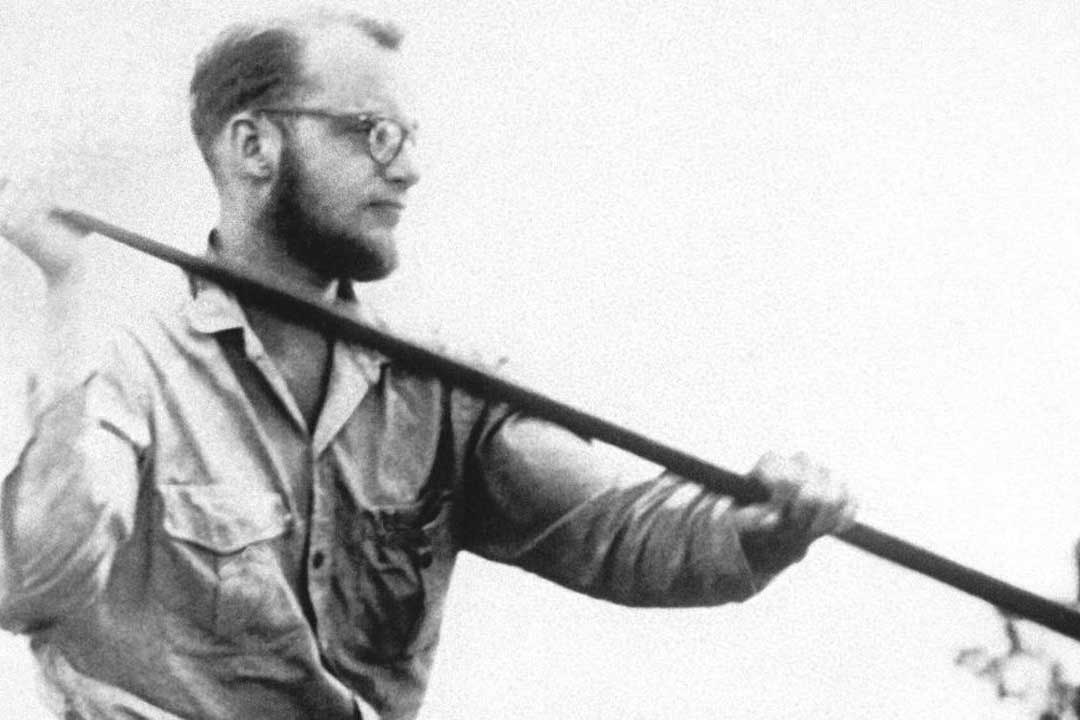
Michael Rockefeller during his time in Asmat (c) Rockefeller Foundation
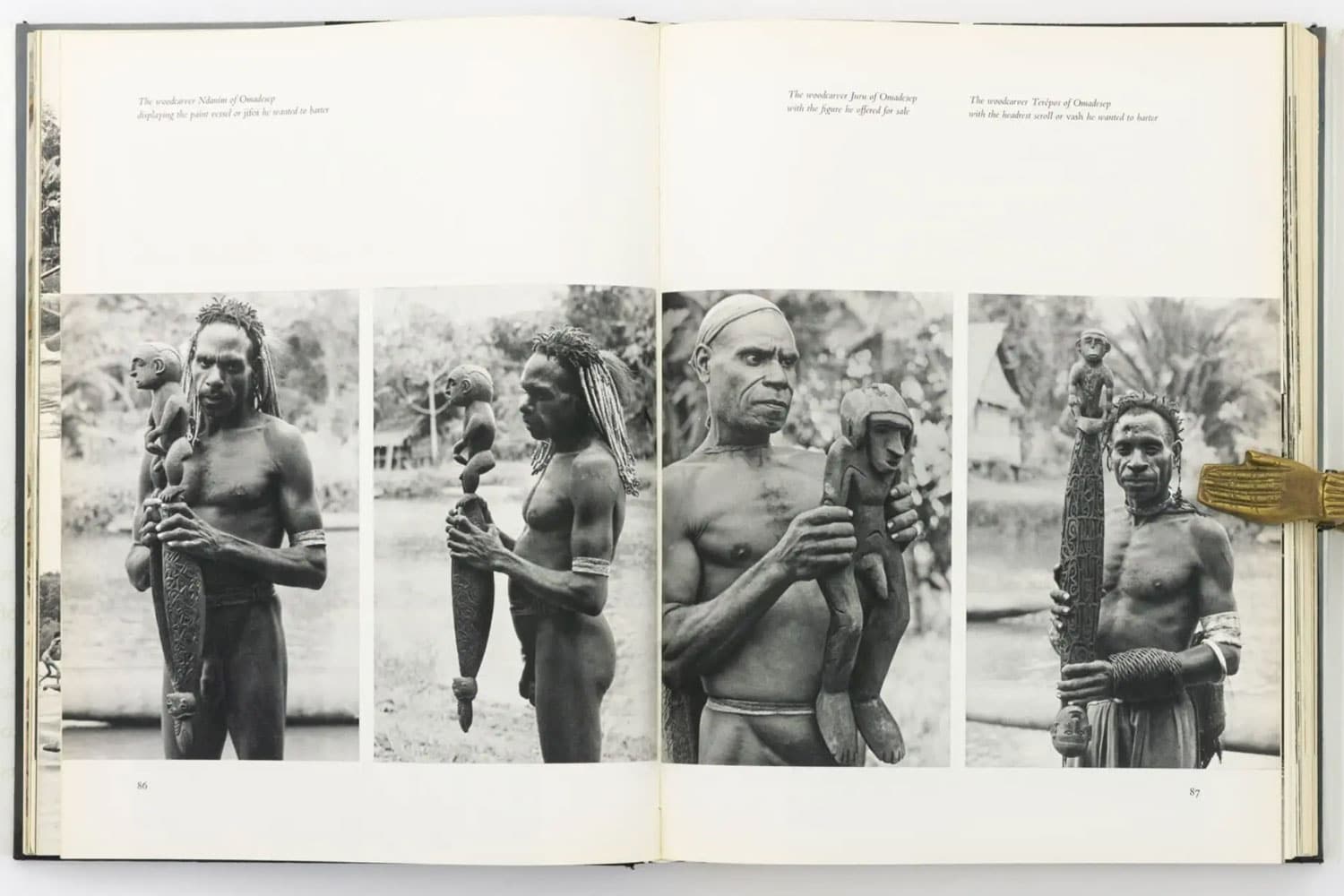
Impressive photography from The Asmat of New Guinea: The Journal of Michael Clark Rockefeller

ROUTE OVERVIEW

We begin, as Rockefeller did, in Agats, the main town of the Asmat region. Instead of returning by boat along the same route, we continue inland and exit via the Baliem Valley – something that was not possible in 1961.

The outline below provides a general idea of the route and key stages of the expedition. As with any journey of this nature, flexibility is essential and adjustments may be required on the ground.

Day 1 – Arrival in Timika, transfer to hotel and meeting of the expedition team. Night in hotel. 
Day 2 – Flight to Agats, transfer to hotel. Visit the excellent Asmat Museum and last preparations. Night in hotel.
Day 3 – Start of the boat journey. Coastal section, then into the Unir River via Komor to Jipawer. Overnight in tent.
Day 4 – Via Manep to Monu and Awemu. Overnight in tent.
Day 5 – Upstream via Tomor to Sagapu, possibly onward to Yeniseko (depending on water levels). Overnight in tent.
Day 6 – Full day in the Yeniseko/Sagapu area. Overnight in tent.
Day 7 – Return to the Pomats River junction, continue to Saw-Erma. Overnight in tent.
Day 8 – Along the Wasar River to Pupis and Wejo. Overnight in tent.
Day 9 – Full day in the Pupis region. Overnight in tent.
Day 10 – Return to Saw-Erma, then via the North River to Bu-Agani. Overnight in tent.
Day 11 – Upstream to Mamugu. Overnight in tent.
Day 12 – Full day in Mamugu (mask-making and dance). Overnight in tent.

Up to this point, we follow Rockefeller’s original route closely. He reached Mamugu on November 10, 1961.

Day 13 – Continue upstream to the boat station at Kenyam. Transfer to town. Overnight in tent.
Day 14 Charter flight over the highlands (passing Mount Trikora) to Wamena. Transfer to The Baliem Valley Resort.
Day 15 – Free day (optional walks or Wamena visit). Overnight at Baliem Valley Resort.
Day 16 – Traditional pig festival near the resort to conclude this exceptional journey. Overnight at Baliem Valley Resort.
Day 17 – Transfer to Wamena Airport for your onward flight.

Dr. Weiglein accompanies the expedition throughout. Full board. Planned accommodation includes 2 nights in hotel, 11 nights in tent, and 3 nights at Baliem Valley Resort.

PHYSICAL REQUIREMENTS

No special fitness level required. Daily activity is moderate and comparable to normal travel. The main challenge is the climate in the lowlands. Heat and humidity can be demanding, so staying well hydrated is essential. At times, comfort is very basic with limited access to showers and toilets. We recommend participants have some outdoor experience and are familiar with tropical or adventure travel conditions.

Asmat dance masks symbolize evil spirits
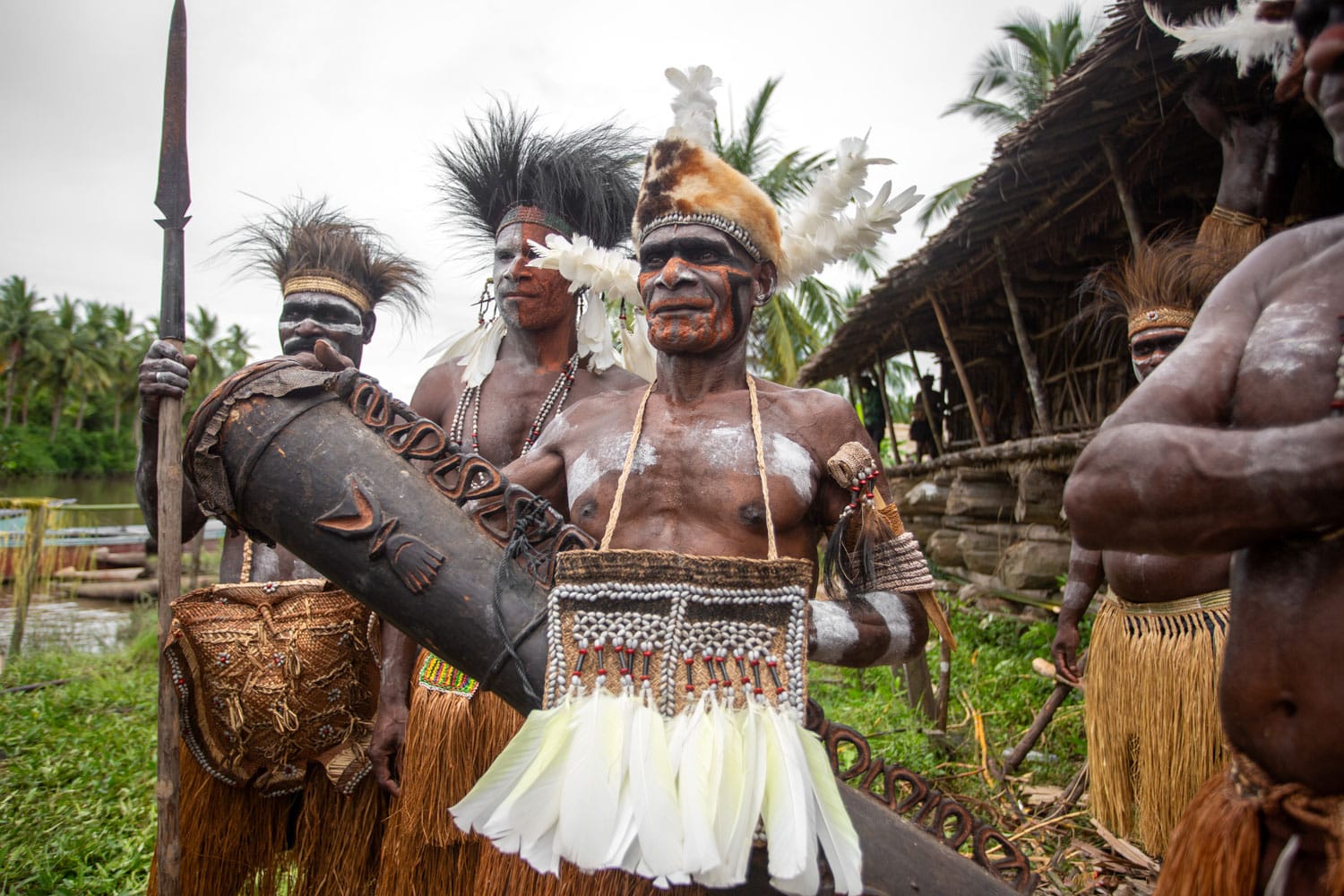
Tifa drums are an essential part of Asmat ceremonial life
All ceremonies take place inside or around the Jeu men’s house
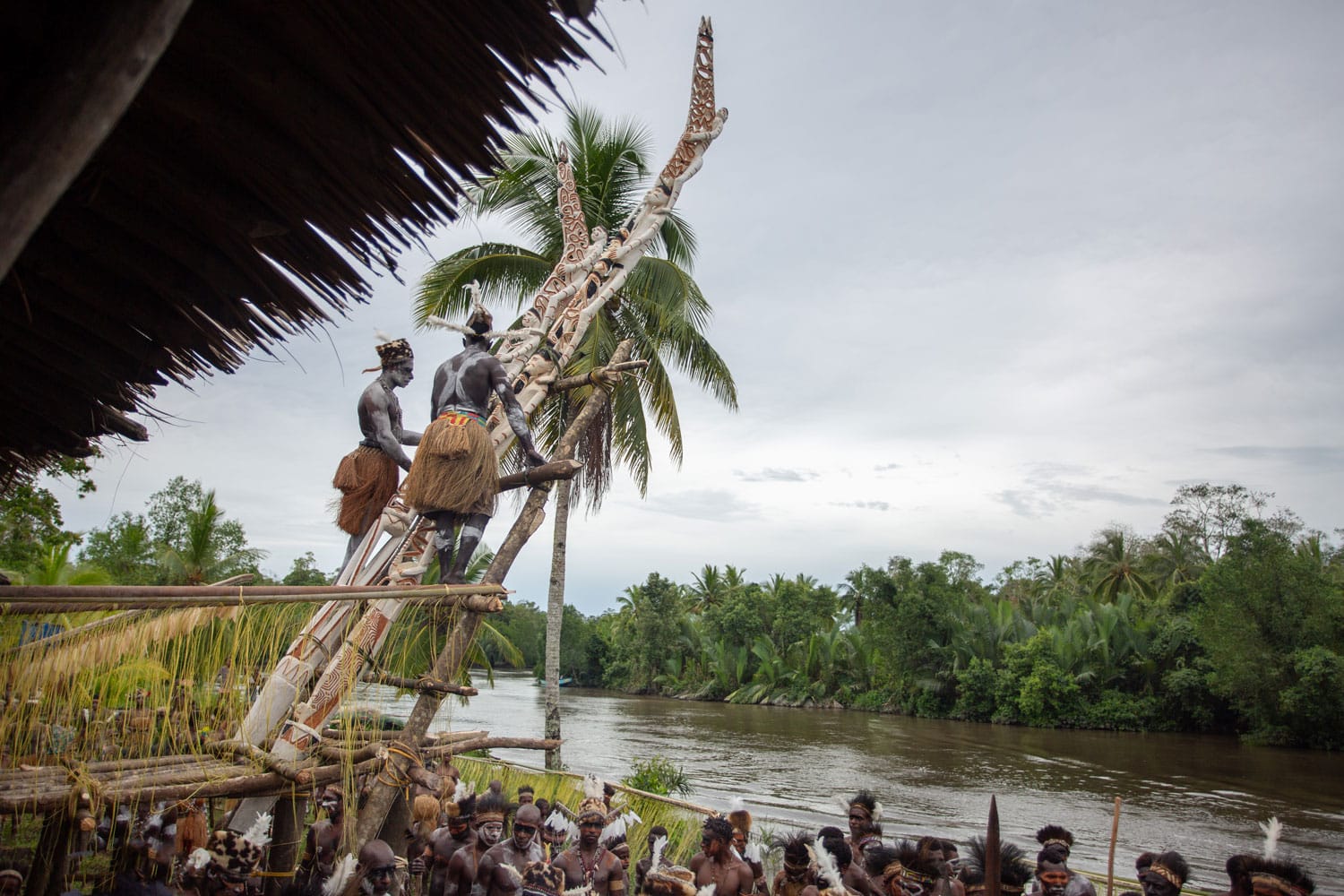
Ancestor pole ceremony inside the Jeu

THE HISTORIC EXPEDITION SERIES

With our new series Historic Expeditions, we retrace some of the most remarkable journeys of exploration in Papua. Following the routes of early explorers, these tours connect past and present in regions that remain remote, challenging, and largely unchanged. Each expedition follows routes that, even today, are rarely or never traveled and retain a distinct pioneering character even under modern conditions.

PLANNED EXPEDITIONS

  • Michael Rockefeller – Asmat
  • H.A. Lorentz – Trikora
  • Heinrich Harrer – Baliem Valley
  • Heinrich Harrer – Carstensz Pyramid
  • Heinrich Harrer – JäLiMe Stone Axe Quarry
  • A.F.R. Wollaston – To the Ice of the Pacific

PRICE & CONDITIONS

Asmat - In the Footsteps of Michael Rockefeller ● 17 days/16 nights ● Group Tour
Price per person from Timika/TO Wamena, Papua
USD 6.990 Price in EUR / IDR on request
  • 11.01.-27.01.2027
+USD 500 for single room/tent
INCLUDES
DOES NOT INCLUDE

Travelling to remote areas of Papua is difficult, the conditions are harsh, there is no comfort at all. If you can handle such conditions, you will enjoy this trip. If you have any doubts, ask us before you book it. We are happy to help!

For payment we accept USD, EUR, and IDR. Please let us know your preferred currency. We ask for a deposit of 15% of the tour price at the time of booking. The balance is due no later than 4 weeks before the start of the tour. Prices are subject to change. The final price will be quoted upon confirmation of the tour. Foreigners need a travel permit for Papua (“surat jalan”). We will take care of this permit before your arrival. For the permit we need a copy of your passports and passport photos. A list of equipment will be sent with the booking confirmation.

Scroll to Top

ENQUIRY

Please fill out the form and we will get back to you shortly with a straightforward reply.
You can also send us an email: info@papua-explorer.com

Our typical response time is within 1-2 business days.
Please also check your spam folder for our response, just in case.